Medical Practices Don’t Need a Full-Time Cybersecurity Hire to Take Compliance Seriously
A security-first MSP can help medical offices protect patient data, strengthen compliance readiness, and reduce IT risk without building an internal cybersecurity department.
Angel Preciado
5/11/20265 min read
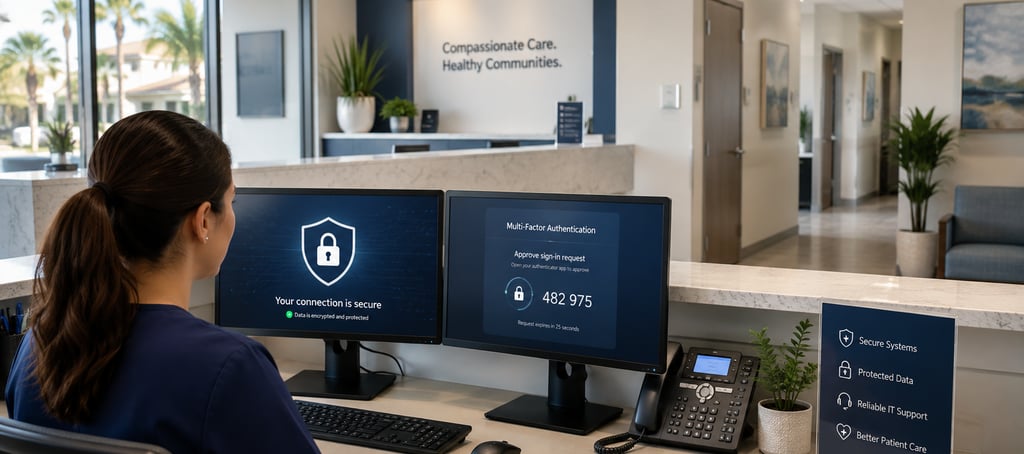
Medical offices are expected to protect patient data, keep systems running, support staff, manage vendors, secure Microsoft 365, and stay compliance-ready. But for many small and mid-sized practices, hiring a full-time cybersecurity specialist is not realistic.
A security-first managed service provider gives your practice broader coverage at a more practical monthly cost.
Medical Practices Carry a Heavier Technology Burden Than Many Small Businesses
Your team depends on reliable workstations, secure email, patient communication tools, medical software, printers, scanners, cloud accounts, backups, internet, phones, and vendor systems.
At the same time, your practice is expected to protect patient data and operate in a HIPAA-aware, compliance-ready way.
That creates a real challenge.
You need cybersecurity maturity, but you may not need — or be ready to afford — a full-time internal cybersecurity specialist.
That is where a security-first MSP becomes the more practical move.
Instead of hiring one internal person to handle a narrow slice of security, a managed service provider can support the broader technology environment: help desk, monitoring, backups, Microsoft 365 security, documentation, vendor coordination, endpoint protection, and compliance-readiness support.
Most Medical Offices Do Not Have an IT Problem
They have an operational risk problem hiding inside their technology.
Patient Data Is a Business-Critical Asset
Medical practices handle sensitive patient information every day. That means email, devices, cloud storage, passwords, backups, and staff access need to be managed carefully.
A missed update, weak password, shared login, or unprotected workstation can create unnecessary risk.
Downtime Disrupts Patient Care
When systems go down, the impact is immediate. Staff cannot access schedules, forms, billing tools, patient communication systems, or clinical platforms.
Reliable IT support is not just convenience. It protects your workflow, revenue, and patient experience.
Compliance Readiness Requires Documentation
Being HIPAA-aware is not only about installing security tools. Practices also need consistent processes, access controls, backup visibility, device tracking, security policies, and documentation.
Without documentation, it becomes harder to prove that your practice is taking security seriously.
Internal Cybersecurity Specialist vs. Security-First MSP
Hiring an internal cybersecurity specialist can make sense for larger healthcare organizations. But for smaller medical practices, that role can be expensive, limited in scope, and difficult to fully utilize.
A security-first MSP gives your practice access to a broader operational layer — not just cybersecurity advice.
Internal Cybersecurity Specialist
An internal cybersecurity specialist is usually best suited for larger organizations with complex security programs.
Their focus may include security strategy, risk management, incident response planning, audits, and specialized cybersecurity controls.
But one person may not handle help desk support, backups, Microsoft 365 administration, vendor coordination, hardware support, onboarding, offboarding, documentation, and day-to-day IT issues.
The cost is also bigger than salary alone. A practice may need to account for benefits, taxes, tools, training, management overhead, and additional IT support.
If that person leaves, gets overwhelmed, or lacks broad IT coverage, the practice may still have major support gaps.
Security-First MSP
A security-first MSP is often a better fit for small and mid-sized practices that need practical, ongoing IT and security coverage.
An MSP can help with managed IT, endpoint protection, monitoring, backups, Microsoft 365 security, documentation, user support, vendor coordination, and compliance-readiness support.
An MSP does not replace legal counsel, compliance officers, or formal HIPAA audit services.
But it does give the practice a more complete technology support layer under a predictable monthly model.
The practice gets help desk support, security operations, documentation, maintenance, and technology planning under one relationship.
The Real Cost Is Bigger Than One Cybersecurity Salary
When a medical practice thinks about cybersecurity, the first idea is often: “Should we hire someone?”
But the real cost is not just payroll.
A full-time internal cybersecurity specialist may still need tools, licenses, monitoring platforms, endpoint protection, backup systems, documentation software, Microsoft 365 security configuration, ticketing tools, training, and escalation support.
And that person may not be the same person who fixes printers, supports staff, configures new workstations, coordinates with your EHR vendor, manages backups, or handles Microsoft 365 issues.
That is why many practices benefit from a security-first MSP first.
An MSP can help cover the full operational stack: device support, account security, endpoint protection, cloud security, backup monitoring, vendor coordination, policy support, documentation, and strategic IT planning.
For many small and mid-sized practices, that is more cost-effective than hiring a single internal cybersecurity specialist too early.
What You Are Really Paying For
A security-first MSP is not just another IT vendor.
The right MSP gives your practice a practical monthly layer of support across daily operations, security tools, Microsoft 365, backups, staff requests, vendor coordination, and compliance-readiness documentation.
That wider coverage is usually what medical practices need before adding internal cybersecurity headcount.
What a Security-First MSP Should Help Your Medical Practice Handle
A medical practice does not need random IT support. It needs structured, security-first support that helps reduce risk while keeping the office productive.
A strong MSP should help with:
Microsoft 365 Security
Secure email settings, multi-factor authentication, account access reviews, shared mailbox controls, and safer collaboration practices.
Endpoint Protection
Security tools, device monitoring, patching, threat detection, workstation standards, and better visibility across practice-owned systems.
Backup and Recovery Readiness
Backup monitoring, restore planning, recovery expectations, and protection against accidental deletion, hardware failure, and ransomware disruption.
Documentation and IT Standards
Asset tracking, user access documentation, vendor notes, network details, onboarding and offboarding procedures, and security process records.
Vendor Coordination
Support coordination with internet providers, phone vendors, EHR platforms, billing systems, copier providers, and other technology partners.
Compliance-Readiness Support
HIPAA-aware IT practices, security documentation support, risk-reducing technical controls, and technology planning that helps the practice operate more responsibly.
Important Compliance Note
ToroTek helps medical practices improve IT security, strengthen documentation, and operate in a more HIPAA-aware and compliance-ready way.
ToroTek does not guarantee HIPAA compliance, provide legal advice, or replace a qualified compliance officer, attorney, or formal HIPAA auditor.
Our role is to help your practice build stronger technical controls, better documentation, safer systems, and a more security-first technology foundation.
Build a More Secure Medical Practice Without Hiring a Full Internal Security Team
If your medical office is growing, dealing with recurring IT issues, worried about patient data, or unsure whether your current systems are compliance-ready, now is the time to review your technology foundation.
ToroTek helps small and mid-sized medical practices strengthen their IT, reduce operational risk, and build a more security-first environment.
Why Medical Practices Need a Security-First MSP Before Hiring an Internal Cybersecurity Specialist
Frequently Asked Questions (FAQs)
Does a medical practice need a full-time cybersecurity specialist?
Not always. Larger healthcare organizations may need internal cybersecurity staff, but many small and mid-sized medical practices need broader IT and security coverage first. A security-first MSP can provide help desk support, monitoring, backups, Microsoft 365 security, endpoint protection, documentation, and compliance-readiness support at a more practical monthly cost.
Can ToroTek make my medical practice HIPAA compliant?
No MSP should promise to “make” a business HIPAA compliant by itself. HIPAA compliance involves administrative, technical, physical, legal, and operational requirements. ToroTek helps practices operate in a more HIPAA-aware and HIPAA-aligned way by improving IT security, documentation, access controls, backups, monitoring, and technology processes.
What does compliance-ready IT mean?
Compliance-ready IT means your practice has stronger systems, better documentation, clearer access controls, safer devices, monitored backups, and security processes that support responsible operations. It does not mean compliance is guaranteed. It means your technology environment is better prepared to support compliance efforts.
Why is an MSP more cost-effective than hiring internally?
An internal cybersecurity specialist usually focuses on security, but a medical practice also needs day-to-day IT support, Microsoft 365 administration, backup monitoring, device management, vendor coordination, documentation, and staff support. An MSP gives the practice broader coverage under a predictable monthly model.
What should medical offices look for in an MSP?
Medical offices should look for a security-first MSP that understands sensitive data, Microsoft 365 security, endpoint protection, backup readiness, documentation, vendor coordination, and HIPAA-aware operations. The MSP should be careful with compliance language and should not promise guaranteed HIPAA compliance.
Ready to strengthen your medical office technology foundation?
Get Free Tech Tips & Security Alerts – Monthly
© 2026. All rights reserved. Powered by ToroTek.

Support: 619.376.6995
General Inquiries: info@toro-tek.com
Sales: sales@toro-tek.com
ToroTek is a San Diego-based technology partner supporting small and mid-sized businesses across Southern California with managed IT, cybersecurity, Microsoft cloud, and infrastructure. Support and critical-response coverage are defined by each service agreement.